

By Uarian Ferreira
Contemporary debates on the future of capitalism have increasingly converged toward models capable of reconciling economic efficiency, socio-environmental responsibility, and long-term vision. The concept of warm capitalism has emerged to describe initiatives that preserve market logic while rejecting predatory extraction, short-termism, and the disconnection between capital, territory, and society.
The Hanuman Project1 should be understood within this context — not as a conceptual narrative, but as a concrete operational structure. It represents an advanced case of compatibility between environmental conservation, regulated economic exploitation, and technological innovation, built upon prior institutional dialogue, scientific rigor, and deliberate territorial integration.
More than a water-related venture, the Hanuman Project constitutes a territorial platform of natural assets, anchored in a singular hydrothermal geological system located in the Chapada dos Veadeiros region, in the State of Goiás, Brazil.
Hanuman holds duly constituted mining rights over multiple thermal and hyperthermal water deposits linked to the São Joaquim Geological Fault, a structural corridor spanning approximately 100 kilometers across the Chapada dos Veadeiros. This hydrogeological axis supports a rare system of deposits with distinct thermal, chemical, and temporal properties, including scientifically validated millennial and multimillennial waters.
This point is central: the Hanuman Project is not organized around a single source, but around an integrated hydrogeological system, whose territorial scale — rather than water volume alone — allows it to be understood as strategic natural infrastructure, capable of sustaining multiple productive value chains in a safe and non-predatory manner over time.
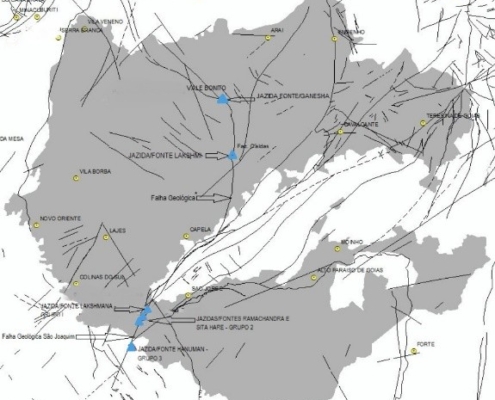
The blue markers indicate the axis of the São Joaquim Geological Fault and the main hyperthermal spring occurrences along the plateau of the Chapada dos Veadeiros National Park, configuring a strategic natural infrastructure associated with a singular hydrogeological system, located 240 km from Brasília, Brazil.
Within the Hanuman Model, mineral hyperthermal water is not treated as a commodity. It is recognized as a singular and strategic natural asset, endowed with economic, scientific, environmental, social, and intergenerational value.
This hydrogeological singularity not only differentiates the asset — it enables the creation of premium global markets, based on qualified scarcity and superior quality standards.
Based on this recognition, the project structures an integrated territorial ecosystem that brings together: regulated economic exploitation; territorial value chains (mineral water, cosmeceuticals, integrative health, functional beverages, wellness tourism, technology, and specialized services); structured value redistribution mechanisms; and digital governance instruments for traceability and transparency.
A lógica central é maximizar valor por unidade explorada, reduzindo pressão sobre o recurso natural e ampliando o impacto econômico e social no território.
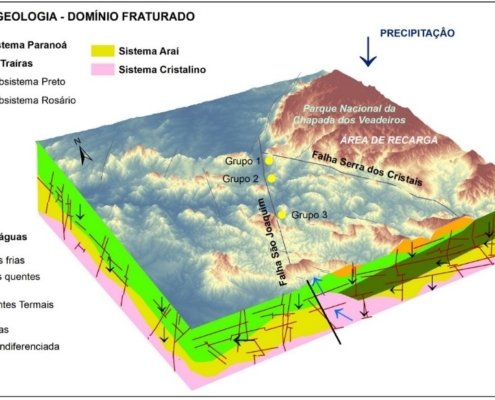
In Brazil’s Central Plateau, within a territory of more than 13,000 km² recognized by UNESCO as a Natural World Heritage Site, a geological fault extending approximately 100 km and embedded in crystalline rocks dating back around 2 billion years structures a singular hydrogeological system. This system enables the ascent of hyperthermal mineral waters originating from rainfall that fell more than 9,000 years ago in the core of the Chapada dos Veadeiros National Park (PNCV).
Technological innovation within the Hanuman Project is not an end in itself, but supporting infrastructure for the economic organization of the natural asset. Blockchain technology operates as an instrument of transparency, traceability, and economic ordering, maintaining auditable physical backing and remaining subordinated to territorial, environmental, and regulatory logic.
In this context, the Hanuman Water Token (HWT)2 stands as the world’s first token backed by water, structured as a Natural World Asset (NWA) — a real, singular, territorially anchored natural asset capable of digital representation — also referred to in financial discourse as a Real World Natural Asset (RWNA).
This architecture enables, in a responsible and forward-looking manner, the structuring of recurring cash-flow mechanisms, without disconnecting financial value from its physical foundation.
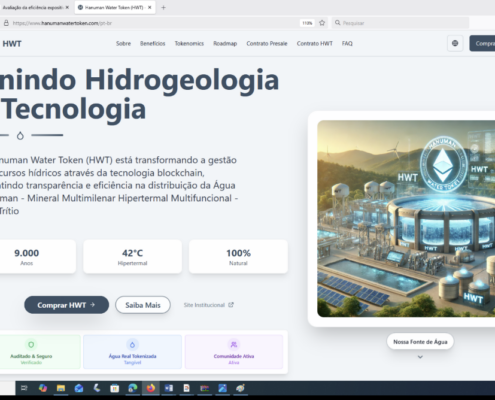
Homepage of the official Hanuman Water Token (HWT) platform, illustrating the digital infrastructure used as an instrument for transparency, traceability, and global distribution of a real hydrogeological asset.5.
The Hanuman Project was conceived in structured dialogue with the State, not at its margins. Its architecture is grounded in duly constituted mining rights, scientific validation by recognized institutions, and continuous engagement with regulatory authorities.
This posture reflects a mature understanding of the role of private capital: to innovate without breaking institutional frameworks, to grow without generating legal uncertainty, and to develop new markets with regulatory predictability and social stability.
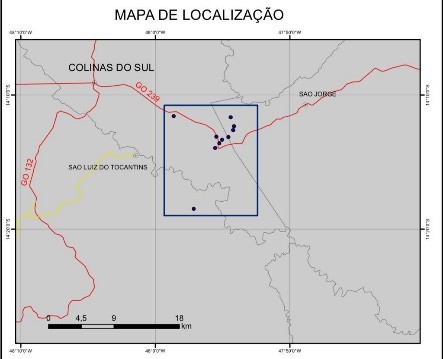
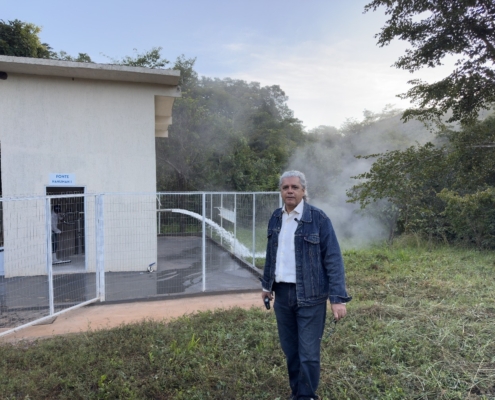
Designated area for the installation of a thermal tourism hub, already recognized by the State of Goiás, located along the São Joaquim Geological Fault, encompassing deposits and springs of Groups 1, 2, and 3.
Territorial integration within the Hanuman Project is achieved through a clear functional separation of roles. Hanuman, as a company, fulfills its legitimate economic function: investment, asset management, risk assumption, and profit generation. Dialogue with local communities, public authorities, and civil society is mediated by OSCIP Pulsar Vida3, which operates as a platform for institutional articulation and organization of territorial value chains.
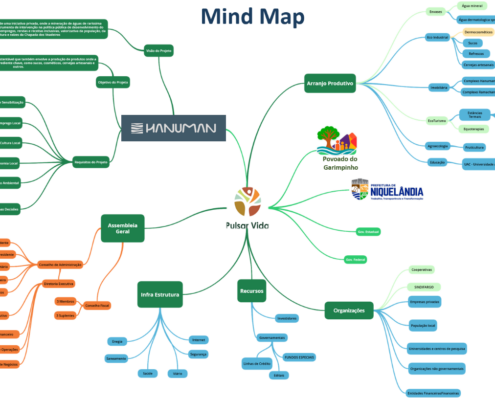
Foundational conceptual map of the Hanuman Project (Jan/2024), illustrating the initial framework for integrating the company, the territory, local communities, and public institutions, later refined and operationalized through structured engagement with the Garimpinho Village community and the Municipality of Niquelândia.
Significant Communities5 therefore emerge not as an assistential policy, but as the result of an economic organization of the territory, in which real productive occupations, purpose, and a sense existential fulfillment are integrated into the value chains linked to the water asset. This arrangement reduces territorial risks, reinforces local articulation, and increases the resilience of the economic ecosystem.

Community gathering during a presentation of the Hanuman Project, illustrating its approach to territorial dialogue, social cohesion and long-term integration of local communities into the economic ecosystem.
A natural outcome of this architecture is the concrete possibility of generating Structured Universal Income within the territory, derived from real economic activity and value aggregation around the mineral asset. This is not a form of state transfer or welfare, but rather structural access by local populations to the economic ecosystem generated by the productive chains associated with thermal and hyperthermal waters.
This is not a form of state transfer or welfare, but rather structural access by local populations to the economic ecosystem generated by the productive chains associated with thermal and hyperthermal waters.
The responsible exploitation of mineral assets — carried out by Hanuman as a legitimate business activity — generates economic flows that are distributed through territorial production chains (cosmeceuticals, wellness tourism, therapeutic services, hospitality, functional foods, and the knowledge economy); community economic integration mechanisms structured by the OSCIP Pulsar Vida; and governance instruments that connect the natural asset to the local economy in a continuous and predictable way.
In this model, territorial income enhances labor, increases economic predictability, and contributes to social stability, reinforcing the long-term sustainability of the project.
In this context, universality does not refer to an indiscriminate distribution of resources, but to the community’s structural access to the economic ecosystem generated by the mineral asset, ensuring that the value produced in the territory is not entirely externalized.
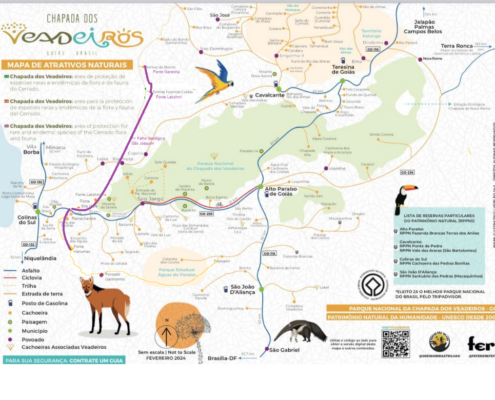
Base map: Associação Veadeiros4 / Associação dos Terapeutas de Alto Paraíso – Chapada dos Veadeiros Wellness Route (publicly available) – Additional overlays (São Joaquim Geological Fault, thermal springs and deposits, and Garimpinho settlement): independent technical elaboration for informational and analytical purposes.
The Hanuman Project naturally aligns with institutional investors who value governance, regulatory predictability, and strategic real assets. The economic infrastructure associated with HWT enables recurring cash-flow generation across medium- and long-term horizons, tied to the responsible and regulated exploitation of the water asset.
Simultaneously, the Hanuman Project, as a territorial platform of natural assets, is structured around a long-term and intergenerational horizon, oriented toward asset longevity and the consolidation of new global markets. This separation of horizons provides financial realism, institutional robustness, and strong alignment with long-term capital.
HWT: Recurring Cash Flow Generation with Global Reach
If warm capitalism emerges as an analytical concept, the Hanuman Project demonstrates that it can be operational, regulated, and economically robust. By structuring a territorial platform of natural assets based on a singular hydrothermal system — integrating governance, technological innovation, territorial organization, and recurring cash generation — the Hanuman Project presents itself as an advanced and replicable case of regenerative capitalism applied to the real world.
This is not a future promise, but an architecture already in operation, designed to endure economic, regulatory, and generational cycles — precisely the kind of structure toward which sophisticated capital tends to gravitate.
The Hanuman Project demonstrates that strategic natural assets, when structured as regulated territorial platforms, can simultaneously sustain recurring cash flow generation, environmental preservation, and long-term social stability.
Long-term capital only makes sense where human presence, territory and continuity remain alive.
__________________________
(*) – Uarian Ferreira é advogado, pesquisador, fundador e sócio-administrador da Hanuman Minas, titular de jazidas de águas minerais termais e hipertermais na Falha Geológica São Joaquim, Chapada dos Veadeiros, Goiás, Brasil..
1 – Meet Hanuman Water – Hanuman; 2 – Hanuman Water Token (HWT) – Tokenização de Água Real
3 – OSCIP Pulsar Vida: https://www.pulsarvida.org.br/turismo-povoado-garimpinho/;
4 – Original Base Map https://drive.google.com/drive/folders/1ittaiPy9zz1jIMuI_Q8oIQayOaR04s3e;
6 – https://www.instagram.com/reel/DPeDiHBkfk5/?igsh=MWgyeHh6bHhyM3VyeQ==
Text by Uarian Ferreira
More than just code on a blockchain, the HWT is the materialization of a new paradigm: a digital contract with the Earth, which grants its holder the right of access to a real, vital, and purposeful asset: the Hanuman Water – Multimillennial Hyperthermal Multifunctional Mineral Water – Tritium-Free.
The HWT is the token of a rare, unique, and mineral-rich water that emerges at the Hanuman Deposit at 42 °C, with a pH between 7.5 and 8.1. This water has traveled more than 9,000 years of underground infiltration through the nearly 2-billion-year-old crystalline basement of the Chapada dos Veadeiros, one of the oldest rock formations on the planet, located in the Central Plateau of Brazil.
This article explores the legal and economic nature of the HWT as a utility token, differentiating it from collective fundraising models, such as crowdfunding, and purely speculative financial tokens.
The economic exploration model of Hanuman Water was conceived by the project’s creator based on four fundamental pillars: distributive, regenerative, inclusive, and sustainable. Official and constructive dialogue with the Brazilian Securities and Exchange Commission (CVM) allowed this structure to be refined and consolidated, confirming the utilitarian nature of the HWT and its alignment with the principles of the new economy.
The project that originated the Hanuman Water Token (HWT) began in 2007 and went through an eighteen-year cycle of geological research, environmental regeneration, and technical certification, combined with the observation of the cultural and social roots of the Chapada dos Veadeiros and the consolidation of mining rights over the Hanuman Deposit.
This territory, with almost 10,000 km² — an area equivalent to that of Jamaica — harbors a natural and human wealth intrinsically integrated into the proposed exploration model.
Tokenization is not the project itself, but the chosen way to democratize access to a natural resource whose exploration was planned to also generate opportunities for the local community, with technical rigor, transparency, and long-term socio-environmental responsibility.
A utility token, by definition, grants its holders access to a product or service. The Hanuman Water Token is the purest expression of this concept. Each HWT represents the right of access to one liter of hyperthermal mineral water from the Hanuman Water Deposit, a resource with unique characteristics on the planet.
The value of the HWT does not lie in the expectation of financial appreciation, but in its intrinsic utility. It is an asset that can be “delivered, manufactured, consumed, and celebrated,” a counterpoint to the lack of backing, volatility, and the purely speculative nature of many crypto-assets. The project does not promise or guarantee financial appreciation to holders but offers access to a scientifically validated and officially certified natural resource.
Consulted by Hanuman Minas Ltda about the token model, the CVM, through Official Letter No. 18/2025/CVM/SSR/GRID (PAd n.19957.005518/2025-25), raised the possibility of the HWT being classified as a Collective Investment Contract (CIC), applying the so-called Howey Test.
PAd n.19957.005518/2025-25
The analysis is based on two pillars: the expectation of profit and the effort of third parties as a determining factor for this profitability.
The main evidence of the HWT’s utility is the concrete and quantified demand from the industry. Companies in the cosmetics and floral remedies sectors of the Chapada dos Veadeiros have already requested a long-term supply commitment, totaling 2.4 million liters of Hanuman Water. These companies do not seek the HWT as an investment but as an essential productive input for their operations, as highlighted in the response letter to the CVM:
This demand is concrete and based on experimental tests that proved the superior quality of the water, demonstrating that the token grants access to a resource with proven utilitarian value, not a promise of financial return.
The value of Hanuman Water does not depend on a future business effort by Hanuman Minas to generate it. It resides in its intrinsic properties, already validated and certified. SINDIFARGO (Union of Pharmaceutical Industries in the State of Goiás) recognized the quality of the mining asset, officially proposing to the State the organization of the artisanal cosmeceutical sector in the Chapada dos Veadeiros.
The HWT functions as a mechanism for accessing a resource that already has proven utilitarian value. The project’s success is linked to the intrinsic utility of the resource and the demand for access to the productive input, not to promises of business effort that generate financial return for token holders.
The legal and economic nature of the HWT clearly distinguishes it from two models frequently confused in the universe of digital assets: collective fundraising contracts (crowdfunding) and speculative financial tokens.
In a crowdfunding model, investors contribute resources with the expectation of future financial return, depending on the success of the venture and the effort of the entrepreneurs. The HWT, conversely, neither promises nor generates an expectation of profit. It grants a right of access to an already existing physical resource that is validated and has proven demand.
The offer of 100 million tokens, corresponding to 100 million liters of water, represents only 20.6% of the authorized annual production of the Hanuman I Well/Spring, which has an authorized annual production and capture capacity of 485,000 m³. This conservative proportion demonstrates that the project prioritizes the preservation of the resource over the maximization of revenue, a characteristic incompatible with the logic of collective fundraising aimed at financial return.
Furthermore, the allocation of 6% of the tokens to be freely distributed to the local community and the OSCIP Pulsar Vida demonstrates an intrinsically social economic model focused on territorial development, not on generating profit for investors.
Speculative tokens, like many cryptocurrencies, are acquired with the expectation of appreciation in the secondary market, without physical backing or practical utility. The HWT, on the other hand, has a 1:1 relationship with a tangible physical asset: each token represents the right to redeem one liter of hyperthermal mineral water.
The HWT is based on the intrinsic utility of the resource and the demand for access to the productive input, not on promises of financial return. The secondary market, if it exists, will naturally reflect the dynamics between the limited supply of a scarce resource and the demand for its proven utility, but the project neither promises nor guarantees appreciation to holders.
Table of Differences: Crowdfunding, Speculative Token, and HWT
| Characteristic | Crowdfunding | Speculative Token | HWT (Utility Token) |
| Holder’s Objective | Financial return | Market appreciation | Access to a physical resource |
| Value Basis | Future business effort | Market speculation | Intrinsic, validated properties |
| Backing | Business promise | None or abstract | Physical (1 token = 1 liter of Hanuman Water) |
| Validation | Financial projections | Market volatility | Experimental tests + industrial demand |
| Purpose | Profit for investors | Capital gain | Practical utility (consumption, manufacture, services) |
| Economic Model | Concentrative | Speculative | Distributive, regenerative, inclusive, and sustainable |
Economic Exploration Model of the Asset: Distributive, Regenerative, Inclusive, and Sustainable
The HWT was conceived with an economic architecture that distances it from the logic of collective investment. Its four pillars form the basis of a new economy.
The distributive pillar is exemplified by the allocation of 6% of the total tokens (6 million HWT) to be freely distributed, with 3% for the local community of Chapada dos Veadeiros and 3% for the OSCIP Pulsar Vida. This initiative represents the world’s first basic income in cryptocurrency backed by a natural resource, an anti-speculative mechanism that promotes territorial development and demonstrates the project’s social character.
Strategic Distribution of Tokens
The distribution of the 100 million HWT tokens balances public access and sustainable development: 80% allocated for public distribution; 6% for the development team; 5% for the Operational Reserve Fund (guaranteeing liquidity for water redemption); 3% for strategic partnerships; 3% as rewards to the local community; and 3% for consultants and marketing. This transparent structure reflects the project’s distributive, regenerative, inclusive, and sustainable economic model.
The Four Pillars of the Economic Exploration Model of the Hanuman Water Deposit
| Pillar | Description | Impact on HWT |
| Distributive | Distribution of part of the tokens to the local community and social partners. | Reduces concentration and speculation, promoting social development. |
| Regenerative | Reinvestment in the conservation of the Chapada dos Veadeiros ecosystem. | Guarantees the perpetuity of the resource and environmental balance. |
| Inclusive | Participation of the community in the governance and benefits of the project. | Empowers local actors, transforming them into protagonists. |
| Sustainable | Prioritization of resource preservation over revenue maximization. | Ensures the availability of water for future generations. |
First Pre-Sale: Benefits and Priorities for the Hanuman Ecosystem
The inaugural offer aims to sell the public offering of 80 million liters of water (equivalent to 80 million tokens) in 12 months. The Hanuman Water Token (HWT) has a price of US$ 2 per liter.
This first pre-sale grants pioneer participants exclusive benefits and priorities in the Hanuman Water ecosystem, including priority redemption during periods of high demand, preference in future new token offerings from the Water Deposit and its Wells/Springs, exclusive discounts on ecosystem products and services, and participation in the founding community with access to special events. This structure recognizes and rewards those who believe in the proposed economic model for the commercial exploration of the Hanuman Water Deposit from the beginning.
Natural World Asset (NWA): The Future of Tokenization
The HWT inaugurates a new category of digital assets: the Natural World Asset (NWA). Unlike Real World Assets (RWAs), which often limit themselves to tokenizing real estate or financial assets, the NWA prioritizes utility, conservation, and social impact.
It is a “digital contract with the Earth” that represents a planetary, ecological, and civilizational vision, where digital assets are commitments to the preservation of the living system. The HWT materializes this concept by linking each token to one liter of hyperthermal mineral water, setting a precedent for the responsible tokenization of natural resources.
HWT: Beyond Code, the Connection with Life
The Hanuman Water Token is not just a digital asset; it is life, connected to the planet’s natural cycle. While almost all crypto-assets still face challenges like volatility and speculation, remaining restricted to digital abstraction, the HWT is a token with physical backing and real purpose.
The HWT transcends simple blockchain registration. It can be physically delivered, manufactured, consumed, and celebrated. It travels the world in contracts with the Earth, not confined to digital networks.
The HWT enjoys the highest privileges that nature and ethics confer on life. It is a contract backed by the purity of the multimillennial water emerging at the Hanuman Water Deposit, tracked by blockchain technology.
The HWT scientifically relies on the nanofilters of the nearly 2-billion-year-old crystalline basement of the Chapada dos Veadeiros. Inviolable in its origin and indestructible in its vital vocation, it is a natural asset with unique characteristics certified by independent institutions.
Deep Alchemy: Science and Spirituality
The HWT does not just have value; it has purpose, delivery, and impact. It is the deep alchemy of nature, rhythm, vibration, and transmutation, connecting science and spirituality.
The Hanuman Water Token grants real access to Hanuman Water, a resource with the potential to subtle and singularize the human body — a perfect and self-determined biocircuit — in tune with the pure and stable frequencies that sustain the coherence of quantum technologies.
Conclusion: The Era of Authenticity
The HWT is proof that blockchain technology can serve a greater purpose, connecting the digital world to a vital physical asset with real and inestimable value.
By clearly differentiating itself from a collective investment contract and a speculative token, the HWT sets a precedent for the management of natural resources, combining technological innovation with social and environmental responsibility. It is the vanguard of a movement that seeks more than profit, it seeks meaning.
The HWT represents access to a scarce natural resource, with certified unique properties, proven industrial demand, and a limited supply to a conservative fraction of the productive capacity. These fundamentals establish a solid foundation for a sustainable ecosystem, where practical utility and social impact are the central pillars.
As I wrote in an article paraphrasing the “Contracts with the Earth,” “Bitcoin was the revolution; the HWT is the evolution.” An evolution that takes us back to the essence, to what is real, tangible, and vital. The HWT inaugurates the Era of Authenticity.
The unique characteristics of Hanuman Water – hyperthermality, multimillennial perpetuity, and multifunctionality for human consumption, functional beverages, integrative medical therapies, cosmeceutical production, and thermal spray and technology applications – can be explored, including scientific certifications, on the institutional website www.hanumanwater.com and the token acquisition portal www.hanumanwatertoken.com.
______________________
(*) Uarian Ferreira – Idealizador e sócio administrador da Hanuman Minas Ltda, titular dos direitos minerários e superficiária da Jazida e Poço/Fonte da Água Hanuman.
Link para Whitepaper HWT (Out/2025):
The digital asset market is transforming, driven by the adoption of cryptocurrencies like Bitcoin, which reached a capitalization of $1.2 trillion in April 2025. However, its volatility – with a 30% drop in 2024 – and high energy consumption, estimated at 91 TWh/year (higher than Switzerland), question its long-term sustainability.
In this context, the Hanuman Water Token (HWT) emerges as an innovative alternative, backed by an essential resource: the millennial hyperthermal mineral water from the Hanuman Deposit – Tritium-Free, located in Chapada dos Veadeiros.
While Bitcoin gained notoriety as “digital gold,” its value remains largely speculative, lacking any tangible backing. In 2024, gold ETFs recorded net outflows of USD 8 billion (World Gold Council), while Bitcoin attracted USD 15 billion (Bloomberg), following ETF approvals in the U.S. In contrast, the HWT is backed by a USD 321 billion combined market projected for 2030, encompassing premium water, cosmeceuticals, thermal wellness, and integrative therapies—all driven by water scarcity and the demand for regenerative solutions. Unlike gold or Bitcoin, HWT’s value is amplified by its practical utility in essential sectors.
| Indicador | Volume Citado no Artigo | Fonte de Verificação | Valor Atualizado se Aplicável | Observações |
| Gold ETF Outflows (2024) | USD 8 billion | World Gold Council (2024) | USD 8 billion | Aligned with projections due to interest rate hikes and shift toward risk assets. |
| Bitcoin Inflows (2024) | USD 15 billion | Bloomberg (2024) | USD 15 billion | Consistent with inflows after ETF approvals in the U.S. and institutional adoption. |
| Premium Water Market (2030) | USD 31 billion | Alliod Market Research (2030 projection) | USD 28,6-32 billion | Includes functional and premium waters; value within projected range. |
| Cosmeceuticals Market (2030) | USD 200 billion | Statista (2030 projection) | USD 189 – 200 billion | Aligned with 8.5% CAGR growth. |
| Thermal Wellness Market (2030) | Not quoted | Global Wellness Institute (2025) | USD 90 billion | Includes medical spas, therapeutic tourism, and integrative clinics (CAGR 7.8%). |
| Integrative Therapies (Public & Private – SUS, 2025) | Not Quoted | Brazilian Ministry of Health, ABRAPIT & IMS Helt (2024) | USD 1.1 billion | HWT positioned as a strategic partner to expand social thermalism with programmed and independent access. |
| Water Scarcity (2023) | 2.2 billion people | UN Roport (2023) | 2.4 billion people | Updated figures from “Water for All” report. |
| Bitcoin Market Cap (2025) | USD 1,2 billion | Bloomberg (2025 projection) | USD 1,1-1,5 trillion | Conservative, considering halving and continued adoption. |
Unlike traditional cryptocurrencies, the Hanuman Water Token (HWT) is born from the principles of the New Economy—regenerative, distributive, and rooted in the real value of natural territories. It is backed by the 9,000-year-old hyperthermal water of Hanuman Spring and designed to support socio environmental regeneration in the Chapada dos Veadeiros.
Revenue from token sales will fund the Hanuman Water Compensation System (SCCHH)—a pioneering mechanism to support reforestation, spring recovery, water infrastructure, and environmental education. Part of the funds will be directed to OSCIP Pulsar Vida, responsible for implementing local value chains.
Revenue from token sales will fund the Hanuman Water Compensation System (SCCHH)—a pioneering mechanism to support reforestation, spring recovery, water infrastructure, and environmental education. Part of the funds will be directed to OSCIP Pulsar Vida, responsible for implementing local value chains.
The SCCHH also addresses the environmental burden of plastic packaging in the bottled water industry. Local bottlers often admit they “sell plastic, not water.” The SCCHH offers a systemic alternative, contributing to a regenerative and sustainable water economy.
Thus, HWT aligns directly with multiple UN Sustainable Development Goals (SDGs): Clean Water and Sanitation, Good Health and Well-being, Decent Work, Sustainable Industry and Innovation, Responsible Consumption and Production, and Life on Land.
This model was designed in partnership with the OSCIP Pulsar Vida, a civil society organization with a long history of involvement in citizen innovation and distributive justice projects. Pulsar Vida will coordinate the implementation of local production arrangements, with an emphasis on the value chains of the cosmetics, beverages and natural foods sectors, Cerrado fruit crops and multipurpose infrastructures. The actions will begin in the territory closest to the deposit – the Povoado Garimpinho – with plans for integrative medicine centers (in dialogue with the SUS), ecotourism centers, therapeutic tourism and nature sports.
The Hanuman Water Token is not just a financial innovation. It represents a new paradigm in the extraction and use of natural resources, where water is not an end in itself, but a means for regenerating territories and redistributing value with environmental and social justice.
With large-scale production set for 2028 and guaranteed deliverability via blockchain, the HWT is attracting increasing interest from investors seeking real, traceable, sustainable assets. Bloomberg estimates the global ESG investment market has already surpassed USD 500 billion, positioning the HWT as a pioneering utility-token with vital backing.
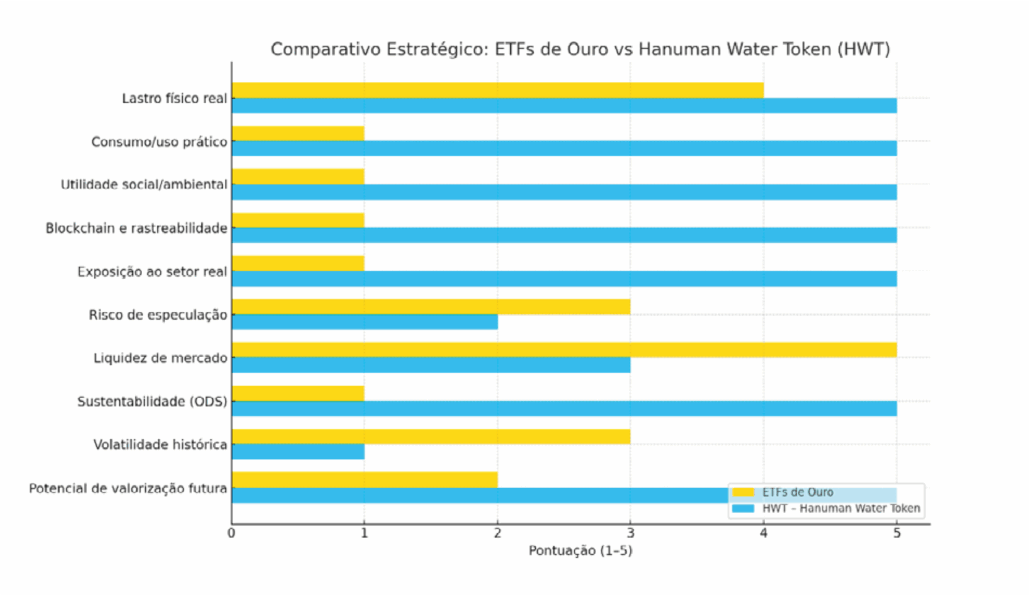
As global markets search for safe assets amid currency, climate, and governance crises, traditional gold ETFs remain classic hedges. However, the HWT introduces a new class of assets—liquid, regenerative, and utility-based—that combine tangible backing, blockchain traceability, and socio environmental impact.
The following comparative charts demonstrate, based on strategic criteria, how HWT positions itself in relation to gold ETFs, traditional ETFs and Bitcoin. They reveal not only the robustness of HWT as a real value asset, but its unique ability to combine protection, purpose and regeneration.
While gold ETFs merely preserve wealth, HWT regenerates land, redistributes value, and guarantees future access to multivalent water—a critical input for life, health, and innovation.
It is a hedge with purpose: a next-generation digital asset, rooted in the Earth and aligned with a post-speculative, post-Bitcoin future.
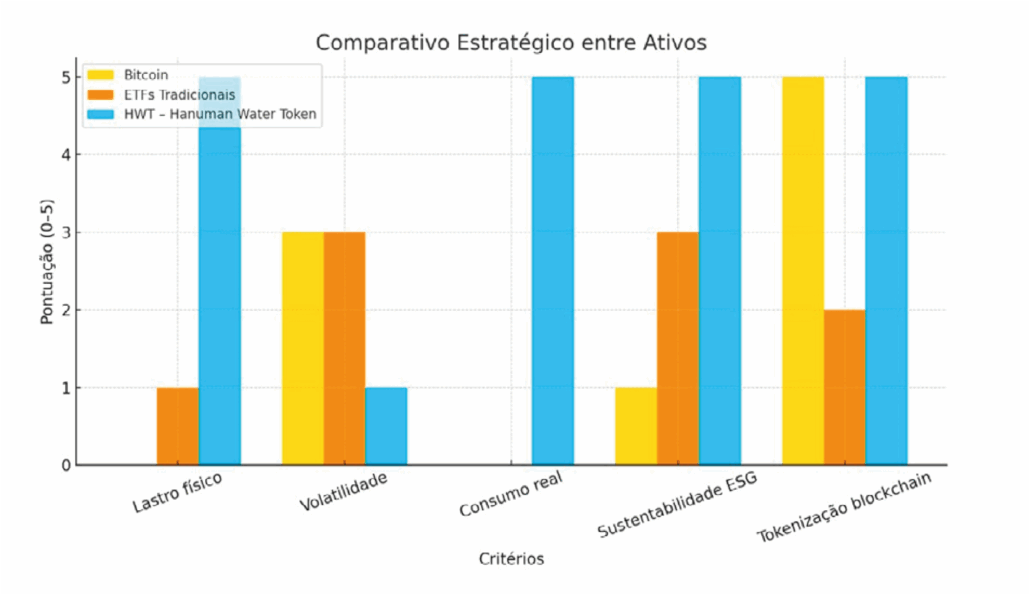
Tokenization is reshaping global markets. The HWT goes beyond digital real estate or NFT art. Available through smart contracts with blockchain traceability, it guarantees physical water delivery from 2028 onward. As the world faces a projected USD 1 trillion in water-related losses by 2030 (World Bank), the HWT stands out as a protective asset of real, regenerative utility—drawing attention from sovereign funds and family offices, a segment valued at USD 6 trillion (PwC, 2025).
Amid rising water scarcity and increasing interest in real assets, the HWT offers a present-day guarantee of access to sacred, therapeutic, multivalent water. Its tokenization is more than a contract —it is a shift in how we relate to Earth’s resources, valuing regeneration over speculation.
It is important to highlight that, even before the completion of the bottling plant scheduled for 2028, Hanuman Water can already be supplied as an input for the manufacture of floral essences, vibrational compounds, cosmeceuticals, natural beverages, and therapeutic applications on a pilot scale. This distribution will primarily serve entrepreneurs and establishments in Chapada dos Veadeiros, Brasília, Anápolis and Goiânia, strengthening the regional vocation for integrative and sustainable products.
The pre-sale of the Hanuman Water Token opens in May 2025. Full details will be published on www.hanumanwater.com.
The HWT is not just a token—it is a covenant between humanity and the Earth. While gold and Bitcoin belong to systems of the past, HWT guarantees a future of balance and vitality—born from the stars, flowing through the Earth, and regenerating life. Join this transformation.

