

By Uarian Ferreira
Contemporary debates on the future of capitalism have increasingly converged toward models capable of reconciling economic efficiency, socio-environmental responsibility, and long-term vision. The concept of warm capitalism has emerged to describe initiatives that preserve market logic while rejecting predatory extraction, short-termism, and the disconnection between capital, territory, and society.
The Hanuman Project1 should be understood within this context — not as a conceptual narrative, but as a concrete operational structure. It represents an advanced case of compatibility between environmental conservation, regulated economic exploitation, and technological innovation, built upon prior institutional dialogue, scientific rigor, and deliberate territorial integration.
More than a water-related venture, the Hanuman Project constitutes a territorial platform of natural assets, anchored in a singular hydrothermal geological system located in the Chapada dos Veadeiros region, in the State of Goiás, Brazil.
Hanuman holds duly constituted mining rights over multiple thermal and hyperthermal water deposits linked to the São Joaquim Geological Fault, a structural corridor spanning approximately 100 kilometers across the Chapada dos Veadeiros. This hydrogeological axis supports a rare system of deposits with distinct thermal, chemical, and temporal properties, including scientifically validated millennial and multimillennial waters.
This point is central: the Hanuman Project is not organized around a single source, but around an integrated hydrogeological system, whose territorial scale — rather than water volume alone — allows it to be understood as strategic natural infrastructure, capable of sustaining multiple productive value chains in a safe and non-predatory manner over time.
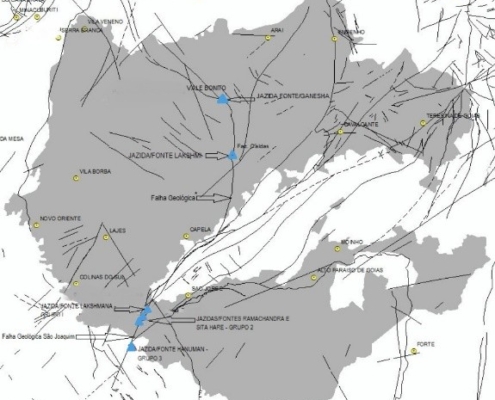
The blue markers indicate the axis of the São Joaquim Geological Fault and the main hyperthermal spring occurrences along the plateau of the Chapada dos Veadeiros National Park, configuring a strategic natural infrastructure associated with a singular hydrogeological system, located 240 km from Brasília, Brazil.
Within the Hanuman Model, mineral hyperthermal water is not treated as a commodity. It is recognized as a singular and strategic natural asset, endowed with economic, scientific, environmental, social, and intergenerational value.
This hydrogeological singularity not only differentiates the asset — it enables the creation of premium global markets, based on qualified scarcity and superior quality standards.
Based on this recognition, the project structures an integrated territorial ecosystem that brings together: regulated economic exploitation; territorial value chains (mineral water, cosmeceuticals, integrative health, functional beverages, wellness tourism, technology, and specialized services); structured value redistribution mechanisms; and digital governance instruments for traceability and transparency.
A lógica central é maximizar valor por unidade explorada, reduzindo pressão sobre o recurso natural e ampliando o impacto econômico e social no território.
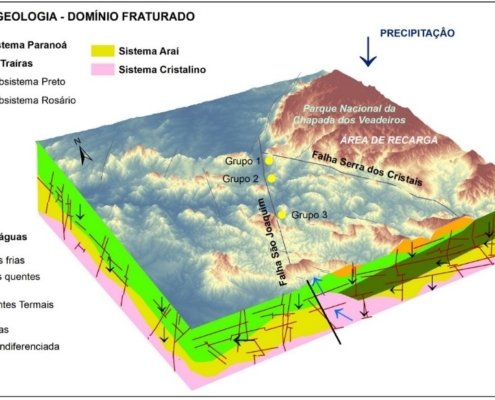
In Brazil’s Central Plateau, within a territory of more than 13,000 km² recognized by UNESCO as a Natural World Heritage Site, a geological fault extending approximately 100 km and embedded in crystalline rocks dating back around 2 billion years structures a singular hydrogeological system. This system enables the ascent of hyperthermal mineral waters originating from rainfall that fell more than 9,000 years ago in the core of the Chapada dos Veadeiros National Park (PNCV).
Technological innovation within the Hanuman Project is not an end in itself, but supporting infrastructure for the economic organization of the natural asset. Blockchain technology operates as an instrument of transparency, traceability, and economic ordering, maintaining auditable physical backing and remaining subordinated to territorial, environmental, and regulatory logic.
In this context, the Hanuman Water Token (HWT)2 stands as the world’s first token backed by water, structured as a Natural World Asset (NWA) — a real, singular, territorially anchored natural asset capable of digital representation — also referred to in financial discourse as a Real World Natural Asset (RWNA).
This architecture enables, in a responsible and forward-looking manner, the structuring of recurring cash-flow mechanisms, without disconnecting financial value from its physical foundation.
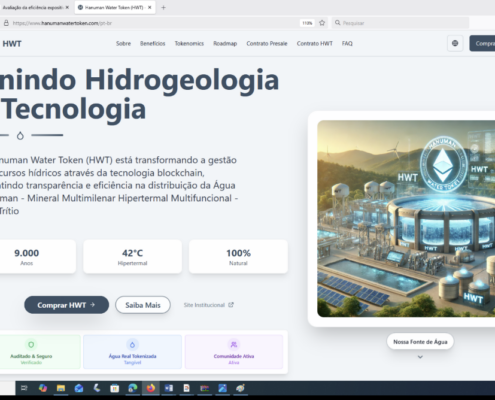
Homepage of the official Hanuman Water Token (HWT) platform, illustrating the digital infrastructure used as an instrument for transparency, traceability, and global distribution of a real hydrogeological asset.5.
The Hanuman Project was conceived in structured dialogue with the State, not at its margins. Its architecture is grounded in duly constituted mining rights, scientific validation by recognized institutions, and continuous engagement with regulatory authorities.
This posture reflects a mature understanding of the role of private capital: to innovate without breaking institutional frameworks, to grow without generating legal uncertainty, and to develop new markets with regulatory predictability and social stability.
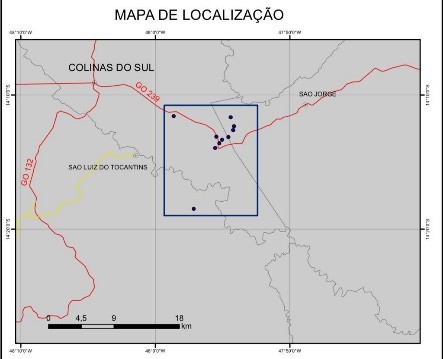
Designated area for the installation of a thermal tourism hub, already recognized by the State of Goiás, located along the São Joaquim Geological Fault, encompassing deposits and springs of Groups 1, 2, and 3.
Territorial integration within the Hanuman Project is achieved through a clear functional separation of roles. Hanuman, as a company, fulfills its legitimate economic function: investment, asset management, risk assumption, and profit generation. Dialogue with local communities, public authorities, and civil society is mediated by OSCIP Pulsar Vida3, which operates as a platform for institutional articulation and organization of territorial value chains.
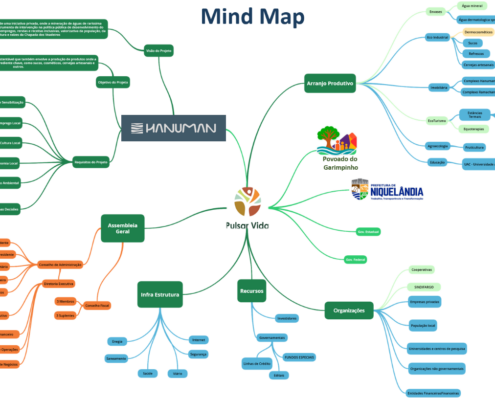
Foundational conceptual map of the Hanuman Project (Jan/2024), illustrating the initial framework for integrating the company, the territory, local communities, and public institutions, later refined and operationalized through structured engagement with the Garimpinho Village community and the Municipality of Niquelândia.
Significant Communities5 therefore emerge not as an assistential policy, but as the result of an economic organization of the territory, in which real productive occupations, purpose, and a sense existential fulfillment are integrated into the value chains linked to the water asset. This arrangement reduces territorial risks, reinforces local articulation, and increases the resilience of the economic ecosystem.

Community gathering during a presentation of the Hanuman Project, illustrating its approach to territorial dialogue, social cohesion and long-term integration of local communities into the economic ecosystem.
A natural outcome of this architecture is the concrete possibility of generating Structured Universal Income within the territory, derived from real economic activity and value aggregation around the mineral asset. This is not a form of state transfer or welfare, but rather structural access by local populations to the economic ecosystem generated by the productive chains associated with thermal and hyperthermal waters.
This is not a form of state transfer or welfare, but rather structural access by local populations to the economic ecosystem generated by the productive chains associated with thermal and hyperthermal waters.
The responsible exploitation of mineral assets — carried out by Hanuman as a legitimate business activity — generates economic flows that are distributed through territorial production chains (cosmeceuticals, wellness tourism, therapeutic services, hospitality, functional foods, and the knowledge economy); community economic integration mechanisms structured by the OSCIP Pulsar Vida; and governance instruments that connect the natural asset to the local economy in a continuous and predictable way.
In this model, territorial income enhances labor, increases economic predictability, and contributes to social stability, reinforcing the long-term sustainability of the project.
In this context, universality does not refer to an indiscriminate distribution of resources, but to the community’s structural access to the economic ecosystem generated by the mineral asset, ensuring that the value produced in the territory is not entirely externalized.
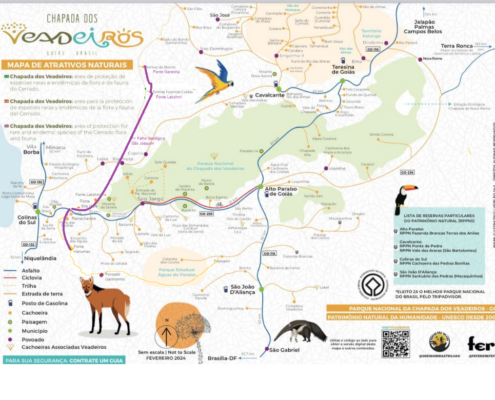
Base map: Associação Veadeiros4 / Associação dos Terapeutas de Alto Paraíso – Chapada dos Veadeiros Wellness Route (publicly available) – Additional overlays (São Joaquim Geological Fault, thermal springs and deposits, and Garimpinho settlement): independent technical elaboration for informational and analytical purposes.
The Hanuman Project naturally aligns with institutional investors who value governance, regulatory predictability, and strategic real assets. The economic infrastructure associated with HWT enables recurring cash-flow generation across medium- and long-term horizons, tied to the responsible and regulated exploitation of the water asset.
Simultaneously, the Hanuman Project, as a territorial platform of natural assets, is structured around a long-term and intergenerational horizon, oriented toward asset longevity and the consolidation of new global markets. This separation of horizons provides financial realism, institutional robustness, and strong alignment with long-term capital.
HWT: Recurring Cash Flow Generation with Global Reach
If warm capitalism emerges as an analytical concept, the Hanuman Project demonstrates that it can be operational, regulated, and economically robust. By structuring a territorial platform of natural assets based on a singular hydrothermal system — integrating governance, technological innovation, territorial organization, and recurring cash generation — the Hanuman Project presents itself as an advanced and replicable case of regenerative capitalism applied to the real world.
This is not a future promise, but an architecture already in operation, designed to endure economic, regulatory, and generational cycles — precisely the kind of structure toward which sophisticated capital tends to gravitate.
The Hanuman Project demonstrates that strategic natural assets, when structured as regulated territorial platforms, can simultaneously sustain recurring cash flow generation, environmental preservation, and long-term social stability.
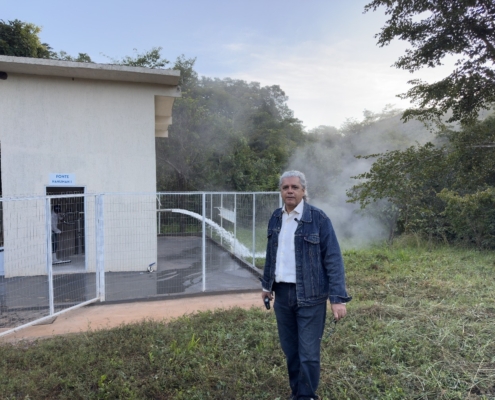
Long-term capital only makes sense where human presence, territory and continuity remain alive.
__________________________
(*) – Uarian Ferreira é advogado, pesquisador, fundador e sócio-administrador da Hanuman Minas, titular de jazidas de águas minerais termais e hipertermais na Falha Geológica São Joaquim, Chapada dos Veadeiros, Goiás, Brasil..
1 – Meet Hanuman Water – Hanuman; 2 – Hanuman Water Token (HWT) – Tokenização de Água Real
3 – OSCIP Pulsar Vida: https://www.pulsarvida.org.br/turismo-povoado-garimpinho/;
4 – Original Base Map https://drive.google.com/drive/folders/1ittaiPy9zz1jIMuI_Q8oIQayOaR04s3e;
6 – https://www.instagram.com/reel/DPeDiHBkfk5/?igsh=MWgyeHh6bHhyM3VyeQ==

In an era of exponential technology, when visionaries like Ray Kurzweil predict the Technological Singularity — a moment when innovations such as artificial intelligence and nanotechnology will redefine humanity — Hanuman Water emerges as a singularity in its own sphere: hydrogeological purity.
Surging from deep Water Deposits in Chapada dos Veadeiros, isolated for over 9,000 years, Hanuman is more than a multifunctional hyperthermal, tritium-free¹ mineral water. It is a break from the existing market, a watershed that creates a new paradigm of conscious consumption, health, and connection with pre-industrial purity.
The Nuclear Era and Global Contamination
Since the nuclear tests of the 1940s, tritium — a radioactive isotope of hydrogen — has infiltrated the global hydrological cycle, contaminating even mineral waters considered “pure.” Studies from Hirosaki University (2023)² confirmed traces of tritium in 41 brands of mineral water from 23 countries in the Northern Hemisphere, showing that microplastics, heavy metals, and pesticides also mark the post-industrial era.
In this context, Hanuman Water stands out as a categorical exception: tritium-free (0 Bq/L), free of microplastics, pesticides, and heavy metals, it offers geological purity untouched by modern pollution.
Just as Kurzweil foresees a future where technology transcends biological limitations, Hanuman Water transcends the environmental limitations of our time. Its singularity lies not only in the absence of contaminants but in its ability to offer the human body a biochemical and biophysical environment reminiscent of a pre-industrial planet — an echo of what Kurzweil describes as the creation of new paradigms that redefine the human experience.
Revolutionary Health Benefits
Hanuman Water, with its alkaline pH, balanced electrolytic composition, and bicarbonate concentration, optimizes cellular hydration and nerve impulse transmission, promoting mental clarity, and metabolic balance (Journal of Physiological Sciences, 2022). Its hyperthermal properties (42°C/ 107,6°F) amplify the body’s natural detoxification, stimulating the excretion of heavy metals via sweat and urine (Environmental Geochemistry and Health, 2022).By optimizing hydration and reducing toxic load, Hanuman Water promotes a healthier cellular environment, an essential factor for vitality and combating premature aging.
Beyond these scientific foundations, Hanuman Water possesses a quality that reflects its singular origin. Its ancient journey through the crystalline rocks of Chapada dos Veadeiros gives the water a unique energetic signature, associated with the piezoelectric principle of quartz, amethyst, beryl, and countless other crystals identified underground in the region. Flower and cosmetics producers in Alto Paraíso de Goiás report an unusual vibration and a sense of clarity and well-being when handling and using products containing Hanuman Water.
These benefits align with Kurzweil’s vision that science can improve human health by reducing the accumulated toxic load and allowing the body to operate at its maximum potential.
While the Technological Singularity promises nanobots that will repair the body at a molecular level, Hanuman Water already offers a tangible step: a natural resource that reduces the impacts of modern pollution, preparing the organism for a future where health and technology converge.
A Singularity in the Global Market
It is not mere rhetoric or a marketing catchphrase when it is said that “the singularity of Hanuman Water is categorical, scientific, and revolutionary.” Just as Kurzweil argues that the Singularity will create new domains of possibility, Hanuman does not compete with other mineral waters — it creates an entirely new market. While global brands deal with traces of tritium (0.1-3.1 Bq/L, Hirosaki University, 2023)², microplastics (average of 325 particles/L, Orb Media, 2018), and residual aluminum (up to 0.2 mg/L, EFSA, 2021), Hanuman redefines the gold standard: 0 Bq/L of tritium, 0 microplastics, 0 pesticides, 0 heavy metals.
This purity, preserved for millennia in the nearly 2-billion-year-old crystalline formation of Chapada dos Veadeiros, one of the oldest on the planet, positions Hanuman Water as a landmark in the market for mineral waters, hyperthermal waters, cosmeceuticals, and exclusive beverages. Its territory is a stronghold of hydrogeological purity, evoking the “sacred aquifers” described in indigenous myths. This symbolism resonates with Kurzweil’s almost spiritual vision, which sees the Singularity as an awakening of human and planetary potential.
A New Paradigm for Humanity: The Era of Liquid Contracts with the Earth
The multiplicity of uses, which reinforces its singularity, is a commitment to health, sustainability, and reconnection with a primal state of purity. Although it does not neutralize all environmental risks, its absence of modern contaminants reduces the toxic load on the organism (Nature Reviews Nephrology, 2023), allowing the body to function as if it inhabited a clean planet. This possibility aligns with Kurzweil’s optimism, who predicts a future where technology eliminates biological and environmental limitations, creating a fuller existence.
The innovation of Hanuman Water goes far beyond the physical product: it inaugurates the era of liquid contracts with the Earth through the Hanuman Water Token (HWT). More than a multifunctional mineral water, the water from the Hanuman Water Deposit represents a hydrogeological and economic revolution that breaks paradigms in sustainable water management and mining.
The HWT, based on blockchain technology, democratizes access to Hanuman’s ancestral purity, allowing consumers anywhere on the planet to participate in this rare and regenerative asset. This innovation creates a new business model — sustainable, distributive, multi-generational, and far-reaching.
Just as Ray Kurzweil envisions a future where technology redefines what it means to be human, the HWT redefines water consumption and economics, setting a standard that inspires a new environmental consciousness and promotes global well-being.
The singularity of Hanuman Water is categorical, scientific, and revolutionary. It does not compete in the existing market – it CREATES an entirely new market.
By Uarian Ferreira
____________________
(*) Uarian Ferreira – Lawyer, head of the Chapada dos Veadeiros Thermal Water Project and founding partner of Hanuman Minas Ltda, holder of the mining rights to the Hanuman Water Deposit.
Reference:

New legislation strengthens tokenization and consumer safety at the origin of products
Bill 15.154/2025 amends Article 27 of Law No. 6.360/1976, establishing that:
“Cosmetics, personal hygiene products, perfumes, and similar purpose products shall be exempt from registration and subject to simplified rules when handmade produced, in the form of a regulation that will contain the criteria for classification as handcraft activity.”
This means that:
– Thermal water sprays
– Anti-aging and regenerative creams
– Mineral masks and moisturizing lotions
– Soaps, toners, mists, and natural spa products
Tokenization is not just a technological resource for investors or producers. It brings real benefits to the end consumer, such as:
The expectation is that, in the next eight months, the facilities for the distribution of water intended for the manufacture of cosmeceutical products will be completed. The Hanuman Water bottling industry for direct consumption as mineral water is scheduled to open at the end of 2028.
In addition to regulatory and technological advantages, the new legislation creates a fertile environment for the growth of a broad production chain based on artisanal manufacturing.
In Brazil, it is estimated that there are thousands of small producers of natural cosmetics and botanical soap-making, which now expand and gain formality to access excellent resources like Hanuman Water.
This scenario opens up possibilities for building partnerships with regional cooperatives, natural beauty entrepreneurs, and ecological cosmetic networks, creating a distributed, innovative, and socially regenerative ecosystem.
It is important to note that the management model of the Hanuman Water Deposit provides for rigorous technical and environmental control, based on hydrological sustainability studies, ensuring that the extraction does not compromise the longevity of the water deposit nor the integrity of the surrounding Chapada dos Veadeiros ecosystem.
The convergence between regulatory innovation, the tokenization of resources, and the liquid ancestry of Hanuman Water projects a new chapter for Brazil in the global cosmetics market — where purity, identity, distributive economy, sustainability, and traceability become the new pillars of value.
⸻⸻⸺
Uarian Ferreira
Lawyer, founder of Hanuman Minas Ltda., creator of the Hanuman Water Token (HWT)

